
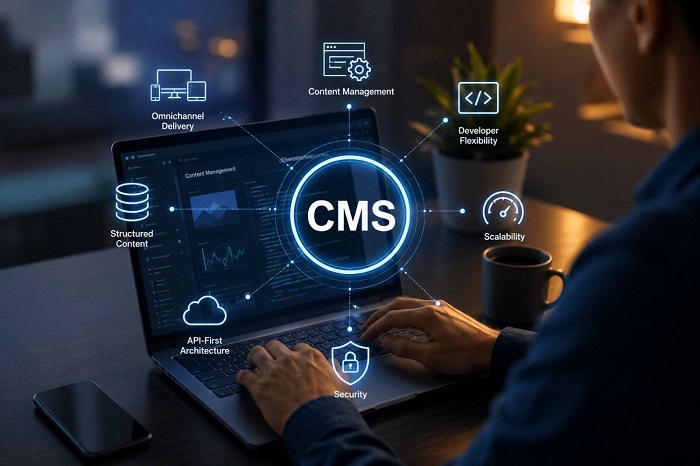
For more than two decades, the web operated under a straightforward bargain. If you wanted to publish content online, you installed an all-in-one content management system like WordPress or Drupal, picked a theme, configured a relational database, and let a single monolithic server handle everything from database queries to HTML rendering. That model built the modern web, but it also saddled growing organizations with rigid templates, brittle plugin ecosystems, and severe architectural bottlenecks.
As consumer touchpoints multiplied from desktop browsers to mobile apps, smart devices, and specialized web applications, the traditional monolithic setup began showing its limits. Decoupling the frontend presentation layer from the backend content repository—the defining premise of a headless CMS—has emerged as the standard engineering response. By treating content purely as structured data accessible through APIs, headless architecture offers a level of flexibility, performance, and durability that traditional platforms cannot match.
Rethinking the Relationship Between Content and Code
Traditional CMS platforms are fundamentally coupled. The administrative dashboard where editors write blog posts lives inside the exact same codebase and database environment that compiles the web page when a visitor lands on the site. If an engineer wants to update a visual component, they must navigate the specific templating syntax, database schemas, and server-side quirks of that particular platform.
A headless CMS strips away the frontend display entirely—hence the metaphor of removing the “head.” The platform focuses exclusively on editorial workflows, asset management, content modeling, and structured storage. Instead of generating web pages, it serves raw content via clean RESTful or GraphQL APIs to whatever frontend application requests it.
This architectural shift fundamentally redefines website development. The database is no longer tethered to a specific theme, and content editors are no longer forced to think strictly in terms of static web pages. Content becomes a reusable digital asset rather than an element locked into a single layout.
Unconstrained Frontend Freedom and Tech Stack Modernization
One of the most immediate benefits of going headless is the complete liberation of the engineering team. In a coupled CMS, your technology choices are predetermined. If the platform is built on PHP and relies on a specific template engine, your developers must write PHP and conform to that engine’s constraints, regardless of whether better tools exist for the job.
With a headless architecture, developers can build the presentation layer using modern frameworks like React, Next.js, Vue, Nuxt, Svelte, or Astro. They are free to choose the libraries, state management tools, and styling paradigms that best fit the project requirements.
This independence brings substantial practical advantages:
-
Faster hiring and onboarding: Engineering leaders can recruit frontend talent based on proficiency in industry-standard JavaScript frameworks rather than hunting for developers with niche experience in legacy CMS templating languages.
-
Component-driven design systems: Modern frontend workflows rely on modular component libraries built with tools like Tailwind CSS and Storybook. Decoupled systems make it easy to maintain a consistent design system across multiple digital properties without wrestling with platform-specific markup overrides.
-
Rapid experimentation: Frontend teams can completely redesign the user interface, test alternative layouts, or migrate to an entirely new rendering framework without touching the underlying database or disrupting editorial operations.
True Omnichannel Delivery from a Central Content Hub
Building a custom website is rarely the end of an organization’s digital roadmap. Most growing businesses operate an expanding ecosystem of digital touchpoints, including native iOS and Android apps, customer portals, marketing micro-sites, smart watch displays, and digital signage.
In a traditional environment, supporting multiple platforms usually leads to redundant content entry or fragile synchronization scripts. Content teams end up publishing an article on the main website, reformatting that same article for an internal knowledge base, and notifying a mobile team to manually recreate it inside an application feed.
A headless CMS acts as a single source of truth. Because content is stored as structured, format-agnostic data—such as JSON payloads containing distinct fields for headlines, body copy, author entities, and media references—any connected device or application can query and render that content according to its own interface specifications. Write once, publish everywhere ceases to be a marketing cliché and becomes a functional reality.
Performance Optimization and Core Web Vitals
Website speed is directly tied to user engagement, conversion rates, and organic search visibility. Monolithic CMS platforms struggle here because they traditionally rely on dynamic, server-side page assembly. Every time an uncached user requests a page, the server executes complex PHP scripts, queries a relational database multiple times, merges the retrieved data into a template, and sends the resulting HTML document back to the browser. Under traffic spikes, this pipeline slows down quickly.
Headless systems typically pair with modern frontend deployment architectures that leverage Static Site Generation (SSG), Incremental Static Regeneration (ISR), or edge rendering on global content delivery networks.
When an editor publishes an article in a headless CMS, a build webhook can trigger the frontend to pre-render the relevant pages as lightweight static HTML and JSON files. These assets are distributed across edge servers worldwide. When a visitor requests the page, the content delivers instantly from the nearest geographic server node without running runtime database queries.
The resulting improvements in Largest Contentful Paint (LCP) and Cumulative Layout Shift (CLS) provide an immediate boost to search engine performance while delivering a noticeably faster browsing experience.
A Significantly Harder Security Perimeter
The security profile of a traditional website is inherently porous. The administrative login page, database connection strings, application server logic, and public-facing presentation layer all sit on the same server environment. A single unpatched plugin vulnerability, an insecure theme file, or an SQL injection exploit can grant an attacker full access to the database and underlying file system.
Decoupling creates an air gap between your public presentation layer and your content infrastructure:
-
No exposed database: The public-facing site consists of pre-built static files or an isolated frontend application running on an edge network. There is no direct database connection available for attackers to target.
-
Hidden administrative interfaces: The editorial backend operates on a separate, secure domain or a fully managed software-as-a-service infrastructure, shielded behind multi-factor authentication and enterprise single sign-on.
-
Resilience against traffic surges and denial-of-service attacks: If malicious actors attempt a distributed denial-of-service attack against the website, they are hitting static CDN cache nodes rather than overwhelming an origin database server. Even if the public frontend experiences issues, the core content repository remains untouched.
Scalability and Independent Team Workflows
In a monolithic environment, content creators and software engineers frequently step on each other’s toes. Large content migrations can stall code deployments, while major backend codebase updates often require temporary editorial freezes to prevent data corruption.
A headless architecture establishes a clear separation of concerns. Content strategists, copywriters, and marketers can design content models, write articles, run localization workflows, and manage media assets completely independently of the engineering sprint cycle. At the same time, frontend engineers can optimize performance, refactor components, and deploy new features dozens of times a day without risking live content changes.
Organizations can scale both teams simultaneously without introducing operational friction or technical gridlock.
Preparing Digital Infrastructure for the Future
Technology stacks evolve quickly. A frontend framework that represents the gold standard today may become obsolete in five years. Migrating away from a traditional monolithic CMS is notoriously painful because the content, layout, and business logic are tangled together; redesigning the visual layer almost always means rebuilding the entire backend database from scratch.
A headless CMS isolates your digital assets from presentation trends. When it comes time to redesign your website or adopt an emerging frontend framework five years down the road, you do not need to export, clean, and re-import hundreds of thousands of articles. The content schema and editorial repository remain intact. You simply build a new frontend application, point it at the existing APIs, and launch.
By treating content as an enduring structural asset rather than disposable page layout code, modern businesses build an infrastructure that adapts gracefully to whatever user interface paradigms come next.
